
Energy costs and business – an update
A look into global energy costs with some positive results and changes you can make to your business’s energy efficiency.
Some good news. On April 16th Spain’s electrical grid ran on renewable energy all day – not one kWh generated by fossil fuels in 24 hours. Solar production also set a new record a few days later with solar production covering 79% of demand. On top of that, wholesale energy is cheap there, confirming the fact that renewable energy is cheap. The average price in the Spanish market was €53.13 per MWh in March – that is £45.25 per MWh to you. The UK wholesale market over the same period was between £80 and £85 per MWh. The main difference between the two is gas.
Our country continues to pay a hefty premium for our addiction to fossil fuels. It also continues to pay the costs of historic policy errors. Our government effectively banned the cheapest source of energy, onshore wind, for a decade. Onshore wind costs about between a half and a third of offshore wind and can be built much closer to demand, avoiding new transmission lines. We have been slow to adjust the market pricing mechanism where gas sets the margin, exposing our market to commodity swings, higher LNG pricing (now Russan gas is not in the market) and very high peak pricing by plants only used to meet occasional peak demand. We are getting there, however. A new record of 12.57 GWh solar production was reached in the UK on April 1st. We now have 17.4GW installed and anticipate another 7GW in the next three years.
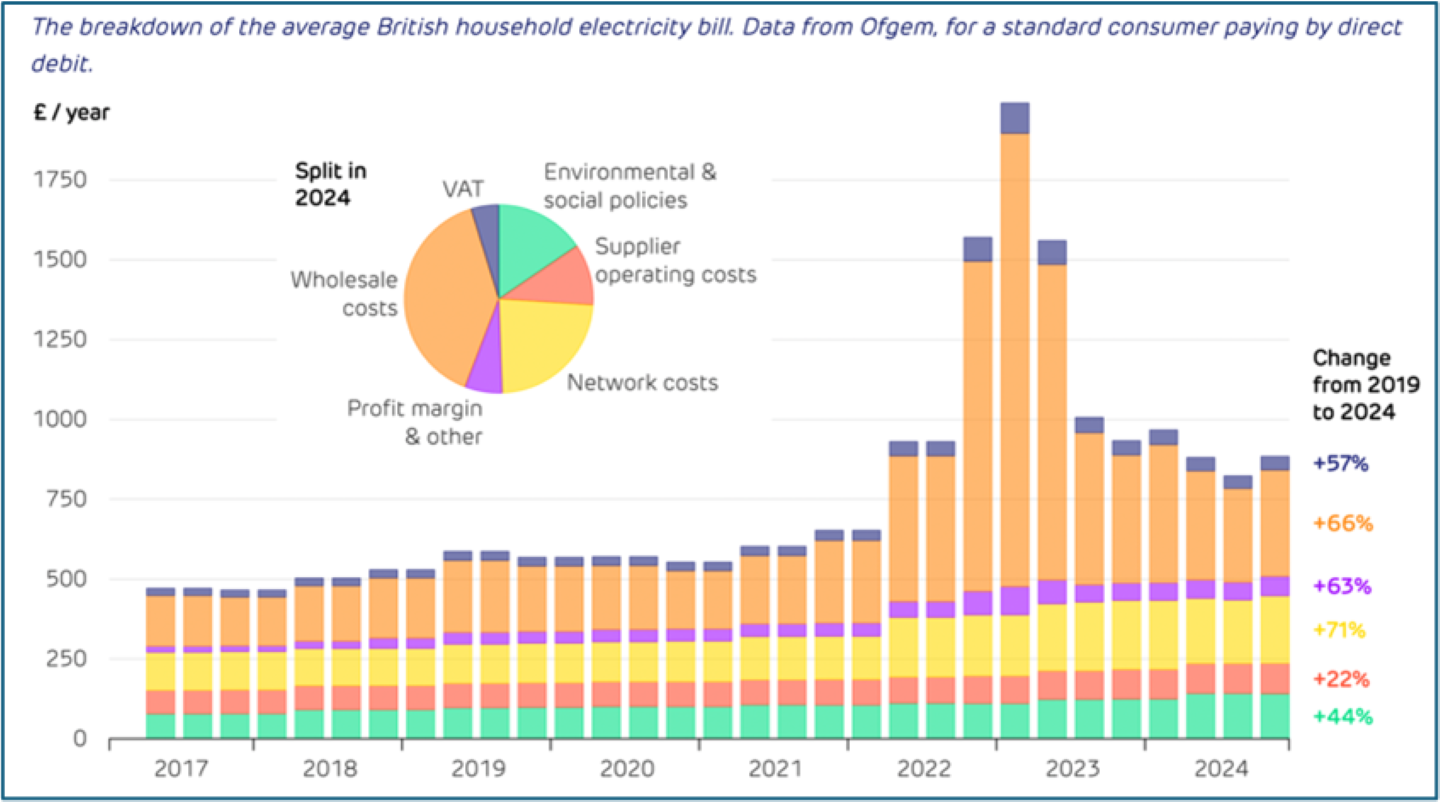
Yet wholesale prices represent only around a third of bills. The table below shows the split for a domestic customer over time. Commercial bills will differ a bit. The cost of the transmission, distribution and retailer margins represent about half the price. Government imposed environmental and capacity charges make up the rest. We want to promote use of electricity and move away from gas – yet the government charges these costs to the thing we want to stimulate and not on the one we want to stop…go figure.
Whatever the issue, if you use energy in any way in your business you should be seeking to lower the cost. What to do?
- The cheapest energy is that you never buy. So issues of limiting consumption, insulation and changing time of use should be reviewed where possible in your business. The Triad demand for example (peak demand charge) rose this year for the first time in five years which may add to you costs if not controlled.
- Install solar – the levelized cost of energy for rooftop solar is currently between £7.00 and £9.00 per MWh compared to commercial variable tariffs between £23.00 and £30.00MWh. The internal rate of return of solar and battery installation can be eye popping today as prices for the technology continue to fall. Businesses can frequently save up to half their consumption (before adding a battery) if their roof is suitable and get a financial payback in less than 4 years.
- Know your tariff – there can be few business costs that are so accepted and as little understood as your energy tariff, so you should educate yourself as a business owner. The information is in your MPAN meter number. Work backwards through the tariff data with your energy supplier or broker to understand exactly the commodity price your supplier is delivering you. That is the only real controllable element in your bill – you can’t avoid the rest. Make sure you understand that key element of your retailers offer.
- Change your supplier if they do not meet your informational needs. In my daily life in the business I see egregious cases of estimated billing, failure to meter properly, billing day time at night rates and vice versa and slow response rates. You have a choice and should use it. There are new suppliers in the market with peer-to-peer options worth exploring. Energy costs should be understood and competed, like any cost you confront.
My role for the IoD is to speak for sustainability and innovation in Kent. I see little conflict between advocating for renewable energy and promoting business efficiency. Renewables are simply the cheapest form of electricity. They also contaminate the least. Lower costs and improved sustainability through technological innovation, a virtuous combination.
About the author

Michael Bax is the Ambassador for Sustainability and Innovation for IoD Kent. He also works with the IoD National Sustainability Special Interest Group. He has had a long career in international renewables power development, acquiring and managing large-scale renewable assets in the USA, Caribbean and Latin America. He currently is also a Director of Kent Community Energy and Trustee of the CT5 Forum, a Kent-based local government forum. He runs an advisory business providing financial advisory and consultancy services to renewable and sustainable businesses both in the UK and overseas.


