Why Safeguarding Children is Critical to Business
Any business that interacts with children or young people - whether as customers, service users, visitors, interns, employees, apprentices, participants, or volunteers - has a legal, ethical and moral duty to keep them safe. Effective safeguarding prevents harm, abuse, exploitation and neglect. Failing to safeguard children puts both the individual child and the organisation at risk.
1. Safeguarding Protects Children – and Protects Your Organisation
Any business that interacts with children or young people – whether as customers, service users, visitors, interns, employees, apprentices, participants, or volunteers – has a legal, ethical and moral duty to keep them safe. Effective safeguarding prevents harm, abuse, exploitation and neglect.
Failing to safeguard children puts both the individual child and the organisation at risk.
2. Why Safeguarding Is a Business‑Critical Priority
A. Protects Reputation & Public Trust
Consumers, parents, regulators and communities expect organisations to provide safe environments for everyone they interact with, particular children. A safeguarding failure can cause severe reputational damage, loss of customers, and long‑term erosion of trust in the organisation.
B. Reduces Legal, Regulatory & Financial Risk
Businesses may face litigation, regulatory scrutiny, criminal investigation or closure if a safeguarding issue occurs and protocols are inadequate. Strong safeguarding systems reduce exposure to vicarious liability for both organisations and their directors.
C. Strengthens Governance & Leadership Accountability
Modern corporate governance frameworks emphasise accountability, transparency and ethical conduct. Safeguarding aligns with ESG, CSR and good‑governance standards and demonstrates responsible leadership.
D. Creates a Safer Culture for Staff & Young People
Clear safeguarding processes improve workforce confidence and promote a culture where concerns are raised early. This protects under‑18s as well as employees, volunteers and contractors.
E. Enhances Market Competitiveness
Organisations able to demonstrate robust safeguarding standards stand out when bidding for contracts, working with public bodies, or serving families, schools, youth organisations or community groups.
F. Provides Assurance to Stakeholders & Regulators
Auditable safeguarding processes build confidence among investors, commissioners, insurers, regulators, and partner organisations.
3. Who Businesses Must Safeguard
Safeguarding applies to anyone under 18 who comes into contact with the organisation, including:
- Customers
- Clients & service users
- Visitors & guests
- Young performers, athletes, participants or students
- Apprentices, interns, work experience students
- Under‑18 employees
- Under‑18 volunteers
If a child steps onto your premises or interacts with your staff, safeguarding obligations apply.
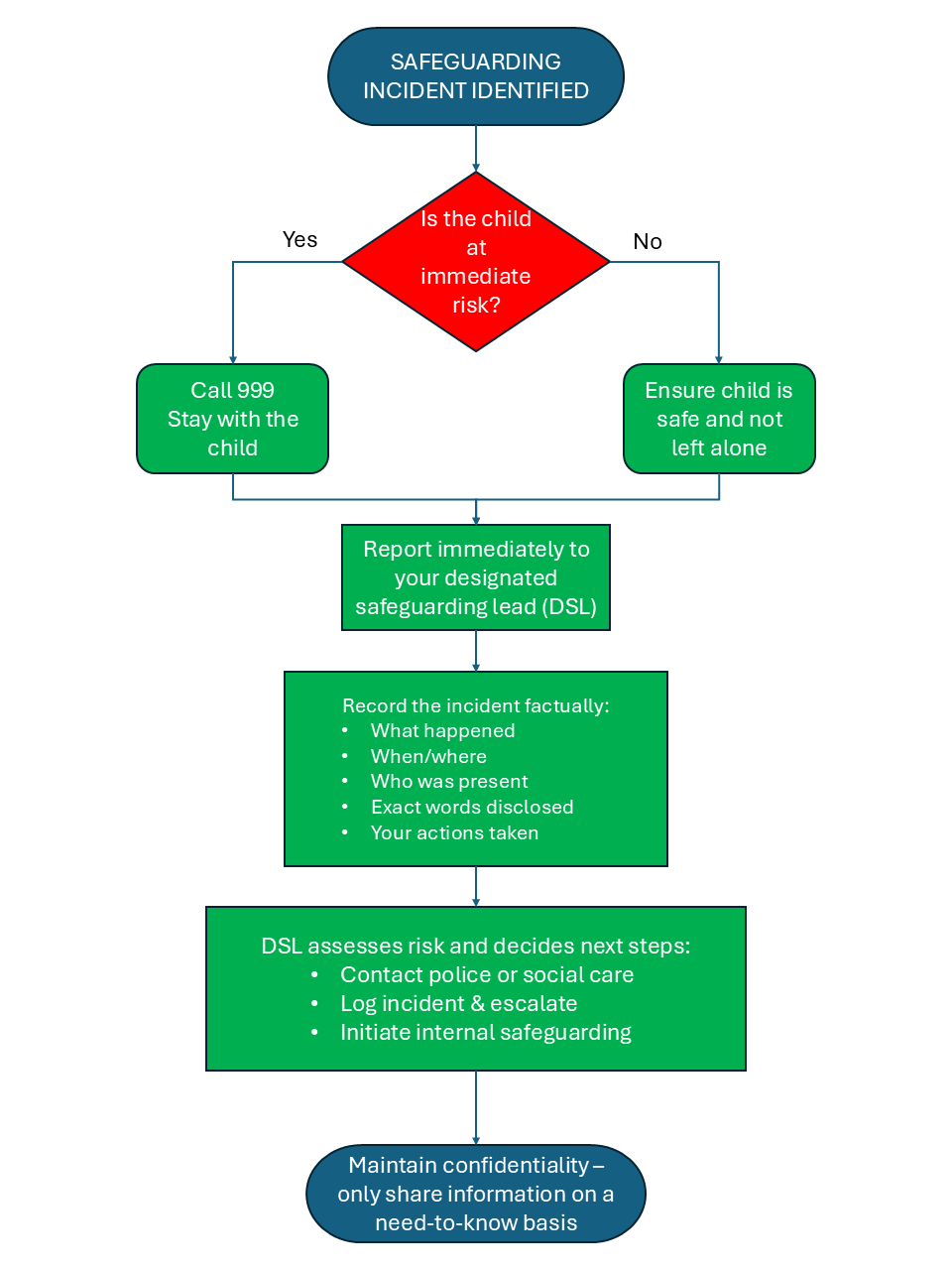
4. FLOW CHART: What To Do If You Become Aware of a Safeguarding Incident
5. Key Principles to Reinforce in Your Business
- Always act in the best interests of the child.
- Never promise confidentiality to the child.
- Record facts, not assumptions.
- All staff must know who the Designated Safeguarding Lead is.
- Every concern must be taken seriously – no exceptions.
Conclusion
For UK businesses that interact with children and young people, even indirectly, safeguarding is an essential part of responsible operations. When businesses create spaces where under-18s are present, they create and accept a clear duty of care.
Taking safeguarding seriously protects children from harm, supports staff to respond confidently to concerns, and strengthens a company’s reputation as a safe and trustworthy organisation. Clear policies, staff awareness, appropriate reporting procedures and a culture that prioritises wellbeing are not just risk-management tools – they are indicators of ethical leadership.
Businesses can obtain a free copy of standard PAS 5222:2024, which gives guidance and requirements for the safety of children in out-of-school settings, by visiting the BSI website here and completing a contact form.

Join a thriving community of skilled directors and leaders
Ask us about membership